Saturday, August 25, 2001

Triple Delight!

I decided last minute to head to Coe Saturday night. I arrived just after twilight. A handful of TACos were there, as already reported by Matt Marcus.

Before moon set I was trying to find open clusters with my 8" f/7. Intermittently, I would look at some of the bright planetaries up in Cygnus. NGC 7008 and NGC 7027 were very interesting structurally. I was quite surprised how well 7008 showed detail, especially when compared to my views of it at Lassen just a week prior.

While looking around in Cepheus I had one of those "non-GoTo" moments... where you find something unexpected while hopping/hunting. It was Struve 2816. I don't know how well the entire view will show in suburban skies, but from a bit of elevation and with good steadiness and transparency the 70X view was stunning. The field contained what appeared to be an open cluster about 40' in diameter, fairly rich. Standing alone in the central portion were easily the three brightest stars in the field... in a true sense the center of attention. The stars commanded my attention... evenly spaced and closely set... the colors ... two nice blue stars bracketing a brighter gold center component. It appeared to be so perfect that I thought it the sort of look Hollywood strives for in a space special-effect.

Worth looking at.

I had planned a short night out... after all, I had just felt like drive and knew a few other observers were heading to Coe. I certainly didn't plan on getting back home at 4 a.m.

Nice night out.

Tuesday, August 14, 2001

Observing from Bumpass Hell

I had the opportunity to observe twice from Bumpass Hell parking lot, at 8200 ft, between the volcanic Lassen Peak and the huge mountain rimmed valley crowned by the spiny fractures that define ancient Mount Tehama's borders. My favorite time of day takes place at that spot... the western peaks silhouetted black and featureless against a deepening neon blue sky that fades deeper to mauves, purples and black as night climbs overhead from the eastern wilderness.

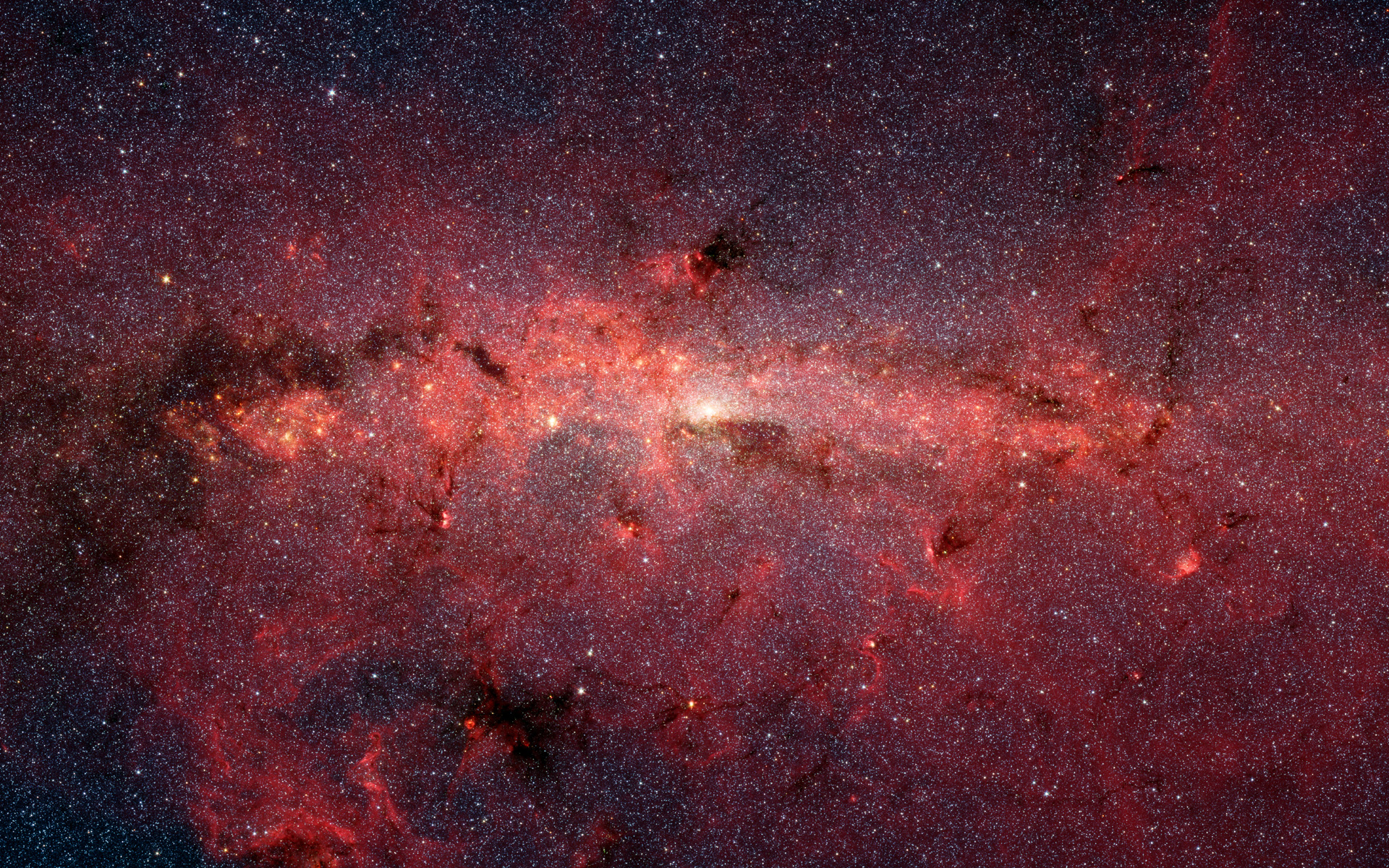
At first Mars was distinct, a lone sight, a solitary beacon of bronze light sitting in the darkening sky. Soon Arcturus, Antares, Vega, Deneb and Altair joined in. It was like listening to the first strings warming up before a great symphony. A few bits of Scorpius, Sagittarius, Lyra, the Cross, and suddenly the sky began opening up with hundreds of points. The dim glow of the Milky Way shone, then brightened and darkened, its innumerable flecks of light painting the sky behind dark veils of dust. This was the same on both trips, enjoying the silent symphony of the sky... developing into what would be a most pleasant and memorable routine. I could not help but think of part of Chet Raymo's essay Silence...

I drift in my canoe down the Queset Brook and I listen, ears alert, like an animal that sniffs a meal or a threat on the wind. I am not sure what it is I want to hear out of all this silence, out of the palpable absence of sound. A scrawny cry, perhaps, to use a phrase of the poet Wallace Stevens: "A scrawny cry from outside... a chorister who's c preceded the choir... still far away." Is that too much to hope for? I don't ask for the full ringing of the bell. I don't ask for a clap of thunder that would rend the veil in the temple. A scrawny cry will do, from far off there among the willows and the cattails, from far off there among the galaxies.

The two trips shared excellent skies, but the August trip had much more the feel of Lassen's of old. July had been at times frenetic in camp and at the observing site. August had less than a dozen observers sharing camp at times. Relaxed, friendly. The only concern I had was whether there would be enough telescopes for the hundreds of visitors we have at the "public night" we put on each trip for the park staff and visitors.

August always has fewer people at the star party. Vacations are winding down, family commitments must be met before kids go back to school, the chance of thunderstorms and fires increase. This August we were lucky in avoiding much smoke from the fires. Fire blazed to our west in the wilds of Mendecino's forest, and smaller fires to our north, south and east. During our stay a fire even lit on the western side of the mountain, just outside the park. But we had some exquisite nights as the prevailing winds kept us smoke (and cloud) free with few exceptions. At no time was the smoke a problem nor were the fires, even the one over the hill, any kind of threat.

What did make the August trip more difficult were the Yellow Jackets. I've never seen camping conditions like those. While the day and night temperatures were really perfect, the park was experiencing an unusually high Yellow Jacket population. This was attributed to the very dry year and lack of water. Almost everyone was bitten. This was not a trip for astro-wusses. The flying terror most enjoyed our bar-b-ques. I learned to prepare meals in a covered fry pan, then transfer into covered plates and eaten in our tent. Outside, the constant buzzzzzzzzz was close at hand.

Regardless of the single rather obvious drawback on the trip, the skies and park scenery were terrific. I had several highlights, including my daughter Mimi finally getting me to climb Lassen Peak. The commanding view from almost 10,500 feet is spectacular. Additionally, looking at the jumbled landscape just outside the main vent atop the peak was a treat and testament to the power and scale of nature's forces. Yet, when compared to the views at night, our planet's small place in the cosmos seems insignificant. The span of the Milky Way on a good night at Lassen is amazing. From the hub of activity in Sagittarius pouring out of the spout, the great sweep into Cygnus, the great dark clouds of gas and dust standing out so well north of Deneb and into Cassiopeia... a sky sprinkled generously with thousands of grains of light flicking in and out 20,000 light years away in a neighbor arm of our galaxy. Nowhere else can I spend so much time simply enjoying this view. One of my favorite activities at Lassen is the public night, and talking to people who do not know what that band of light overhead really is. Some had never seen it. In my telescope I'd show them M51 and make sure they see the spiral arms and understand what they are. I use all the tricks... changing magnification, describing averted vision, talking about why our eyes see better that way at night. Then, when I'm sure they understand what they are seeing, I have them step back and look at the Milky Way. I point to the bright haze in Sagittarius and talk. I show the starry sky overhead and explain how those stars are but our close neighborhood, the glowing grainy band of the Milky Way another arm that we are looking at, across the gulf of 20,000 light years of space. 20,000 year old light. Right in your eye. It still amazes me. Then, I tell people the light from M51 may be as much as 35 million years old. Imagine, light that left the stars in a galaxy 35 million times 5.9 trillion miles away tickling, physically, the optic nerve in your eye, and stimulating your brain, inducing a chemical and temporal reaction in your being.

I think public night is my favorite night. If you couldn't tell.

If it weren't for the sky, the Yellow Jackets would have driven me away. One bite left my arm feeling like someone had whacked it with a piece of 2 by 4. One flew down the back of my pants when I was leaned forward sitting, leading to one of the more frightening yet humorous moments on the trip (no, it didn't bite, fortunately). We started leaving camp during the day to avoid the situation. I took another hike with my daughter to Echo Lake, a nice small body of water sitting in the bottom of a small valley near Summit Lakes. No Yellow Jackets there. We went out to dinner another night, refusing to cook. Breakfasts planned went into the garbage. But the sky was great.

I have several favorite views through the various scopes over the two trips. A spectacular Veil Nebula through a 24". The wisps, so deceptively peaceful and delicate, broke into grainy knots instead of just being the interwoven and twisted lacework we see in smaller scopes and brighter skies. M33 was a thick spiral... its two main arms bending around the core, filled with HII regions. At one point I tried a UHC filter on the galaxy and thought I picked out 6 or 7 HII regions. Without the filter M33 was just plain awesome. I hope some day to have as good a view again. Another observer momentarily mistook M101 for M51, its arms were that distinct. Barnard dark nebulae were a special treat through 20x100 binos... dark clouds snaking their way through the Scutum and Sagittarius star clouds. This made me look up again at the dark lanes visible across Cygnus.. and I thought of other cultures where the dark "shapes" were beings along the celestial highway.

Another wonderful view occurred on the first trip, on the worst night. Everyone was being clouded out, but the single area I had objects left on my list, Canes Venatici, was somehow clear. NGC 5350, also known as Hickson 68, was drop dead gorgeous. A beautiful double star of different magnitude and colors dominated the field. Three bright galaxies gracefully arched away from the pair of stars, echoed softly by two other dimmer galaxies, glowing softly as if deeper in the great lake... echoes in the lake.

Some of the other objects that were interesting included NGC 7027, an unusual looking knotty planetary nebula in the wake of Cygnus' flight. I even showed this object to the public on the second trip. I had several interesting views through Steve Gottlieb's scope... one a slender thread of supernova remnant that was new to both of us. Another view was a puff of light around what I assume was a protoplanetary nebula. Yet another was reminiscent of Minkowski's Butterfly... a planetary with jets of bright gas blowing off it. Steve had found some interesting objects as usual.

I also looked at a number of Abell planetaries. One in particular, Abell 70, was noteworthy. This planetary is dim, but can be held with direct vision under good conditions. A UHC filter helps bring out the nice little planetary ring, but leave the filter off and look for a bright piece of the ring. If you can see the brightening along one edge, you are seeing through the transient object through deep space ... across the eons... to a galaxy glowing through the planetary. I came back to this unusual object over several nights.

Speaking of the public star party nights... the second trip provided an unexpected treat. As the sky grew dark, a bright light appeared in the western sky. Soon it brightened easily into negative magnitude. It climbed overhead and you could hear the voices of amazed onlookers... hundreds of them... realizing it was a brilliant pass of the ISS and Space Shuttle. This created quite a stir and kicked off the public program. And, we had plenty of telescopes. My concerns that we would be outnumbered and overwhelmed were unfounded. From various parts of the park amateur astronomers appeared with scopes. We had 20 to 25 telescopes set up. Even with those numbers the crowds seemed unending for a period of a few hours. But, by midnight attendance thinned, and five nights of observing on that trip, combined with six nights the prior trip, had taken its toll. I was tired. But satisfaction of a great two great trips made even the fatigue feel good. It was a great finish to a summer of observing from Bumpass Hell.

We arrived back home late the next evening. Back to the creations of man. Creature comforts. Familiarity. Clean.

I was already missing the sky... the sight of our galaxy sweeping overhead. Blue stars that really looked blue to the naked eye. Messiers unaided. The buzz of friends... in camp, and at night. The light of galaxies physically tickling my consciousness. A self-aware universe. What an amazing place.

Thursday, June 21, 2001

Bon Ton

Let the good times roll!

I spent three nights at Michelle Stone's Plettstone Dark Sky Preserve beginning Thursday June 21. It was a memorable trip, one that I would recommend to any astronomy or history enthusiast reading this report.

I left home mid afternoon Thursday and soon found myself on the eastern flank of Pacheco Pass. Passing through Los Banos and continuing through the broad expanse of the Central Valley, I drove ahead with no definite plan on how to get to my destination, instead, enjoying a relaxed exploration of the unknown enroute. Approaching Highway 99 southbound, I turned off on Frontage Road, followed irrigation canals, cattle grazing, occasional residences and local farmers in the general direction northeast. Amazing places... I found Chowchilla, a growing city that now has three traffic signals. Soon I was driving north on Plainsburg Road to intersect Highway 140 east to Mariposa.

This is a beautiful drive with the Sierra beyond the rolling foothills that lay ahead. Through the town of Planado, then up to Cathy's Valley where the landscape again changes, granite chards with orange lichen breaking through the ground as the road begins to wind and climb. A few miles ahead the road turns north and offers a view west of the Central Valley across to the Coastal Mountains.

My favorite part of the drive begins soon after. Prior to reaching Mariposa, a side road shortens the drive to Michelle's.. the Mount Bullion Cutoff.

I love the name of the place. Mount Bullion. It forms images of the riches of the California Gold Rush. Mariposa and the surrounding area is steeped in Gold Rush lore.

The Mount Bullion Cutoff is at most 10 miles of scenic backroad driving, past small ranches, a driving school, creeks and rolling hills. It terminates at the small community of Mount Bullion, a small town with several quaint homes, an airport the Apricot Inn restaurant and Highway 49. We head north from there to Bear Valley, walking distance from Michelle's property.

Bear Valley is the location of John C. Fremont's home. Fremont had very large land holdings in and around Bear Valley.. eventually selling the property for $6 million around 1880. Amazing as it sounds, I have heard Fremont died broke.

Fremont ran a large hotel in Bear Valley, as well as the Bon Ton, which today is a fine restaurant. I was at first struck by the oddity of a restaurant with a French name here in Bear Valley. It was Mimi, my daughter, who last month noted the name, as she's studying French in school. I've come to recall though that the gold rush was not an American phenomena, but an international frenzy. And so, we have places with names like French Camp, Bon Ton, etc..

Here is a link to the restaurant with their menu, I intend to eat there next time I visit Plettstone:

http://www.mariposamall.com/bonton/bearvalley.htm

Here is another link with some local history:

http://www.malakoff.com/goldcountry/bearvall.htm

If this isn't enough... an hour upstream you can enjoy the day in Yosemite.

My arrival at Michelle's was uneventful, I found myself alone. I set up the 18" Obsession and my 8" CPT. A dinner of sushi and beer as sunset took place, then a quick cleanup in the outdoor shower. Perfect!

I spent the first night looking for Herschel catalog objects in Ursa Major. I was chasing right ascension as the constellation dove toward the horizon. I needed objects in hours 13 and 14. Of the many objects I hunted down my favorite of the night had to be NGC 5484. This is just a small smudge, but the field it sits in, and that around it are fun. 5484 has a B magnitude of 15.7 and V of 14.7. It was challenging and required study of the star fields around it to nail down the position accurately. In the same field are NGCs 5485 and 5486, significantly brighter, but due to their angular size, still quite dim visually. A chain of three bright stars to the NW of these galaxies, and a distinctive line of stars begin at the SW end of the bright stars and extend E/W. These stars make certain identification possible.

One of the oddities from Thursday night was my inability to observe a few questionable objects. I could not find NGC 3645 or NGC 3911 in Leo. I wanted these two galaxies as they were part of a small handful I had remaining on the Herschel 2500+ in Leo. Has anyone observed these?

The next day temps were high, about 105 degrees, yet staying in the shade and keeping hydrated helped. Mid day Marsha Robinson pulled in, and later Paul and Michelle joined us. Another cool shower after dinner put me in a great mood for observing.

Friday night was better than Thursday... it seemed steadier, although the prior night was quite transparent and gave good results. My favorite sight on Friday was the field that included NGC 4015 in Coma Berenices. A mag 8.3 star anchors a field that contains 13 galaxies within reach of my telescope under excellent conditions. This night I was able to pick out my target object along with 7 other galaxies without working at it. Had I spent more time in the field, I would probably had seen the other 7 galaxies, but I was after specific objects and did not want to dally working off-list objects. Still, the brighter galaxies here were too easy to ignore. 4015 sits about 12 minutes SE of the bright star. Five more minutes SE is NGC 4023. Just SE of the bright star is NGC 4005. NW of the star is a line of three galaxies in line NNE/SSW within 9 minutes of each other, including NGC 3987, NGC 3993 and NGC 3997. A short hop NE of those are NGC 4018 and NGC 4022.

Saturday Bob Czerwinski joined us in late afternoon. Temperatures were pleasantly 20 degrees cooler than the day before. Bob set up his scope and tent while the rest of us attended to preparing a BBQ. Chicken, potato salad, corn on the cob, polska, mixed garden salad, fine bottle of Chardonnay and cherry pie for desert. Great way to start the evening!

The sky at sunset was covered with high cloud, varying between thin and opaque. I lay down in my truck and slept for an hour or so, waking up to improved conditions. As we talked, the sky opened up from zenith westward. This put Coma and Bootes in prime observing position. The sky varied between half open and mostly open off and on during the night. Bob and I called it quits at about 3:30 a.m.

The best view of the night in my scope was the last... not because of the detail, not because of the size, not because there was anything particularly unique about the objects... but for an odd sensation of isolation and fleeting nature the view evoked. The view was in Bootes of NGC 5730 and NGC 5731. Two galaxies dance alone close together in the field of view... but a few brighter stars surrounding them to provide line of sight company. The galaxies are almost identical in size, shape and brightness. Two spindles at the edge of perception, momentary visions of creation that once glimpsed, disappear, like a moment of illumination when some surprising truth is revealed then hidden away again... remaining only as a memory. These two solitary travellers seem to be in a cosmic dance, slightly off angle from one another, otherwise identical. It reminded me of companionship, friendships in an enormous universe, and how transient it all is.

I hope you all had a great time observing over the weekend. Thank you to Michelle and Paul for their kind and generous nature. Their company and companionship make for the best of times!

Let's do it again.... laissez les bon temps roulez!