Tuesday, July 14, 1998

The faint glow of infinity...

I stepped out in my backyard this evening, about 10:30. Along with me were my 10 year old daughter, Mimi, and our guest Claude Marcotte. As our eyes acclimated to the night, it became apparent to Claude that we have something very special here in my neck of the universe, a sky where the stars shine at night. Antares stood high in the south, Arcturus dropping to the west. The Big Dipper was heading to the northern horizon while Cygnus rode high overhead with little Delphinus striking enough in its distinctive shape to warrant my daughter recognizing its shape on her own, noticing the little constellation's with no prior teaching.

Mimi asked about Antares, saying the stars there reminded her of Orion. Of course she was thinking of Betelgeuse (sp?), while looking at the heart of the hunter's nemesis. I told her about the giant star, and that for its incredible size it was like a soap bubble, light enough to probably float on water. She asked for some Greek mythology, so I began the story of Corvus, Crater and the sea snake, Hydra, but she stopped me and told the story to me instead. It was wonderful.

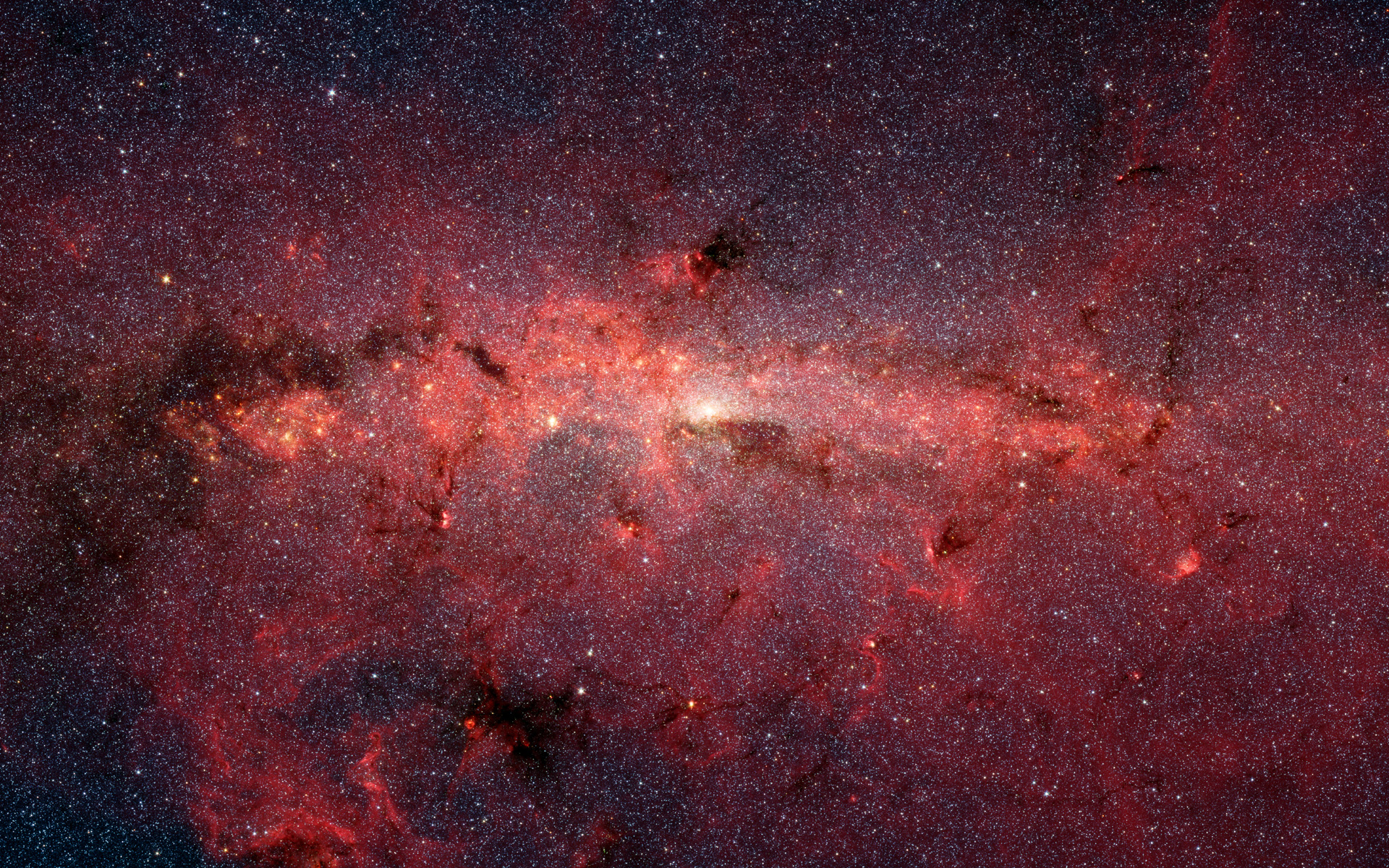
To the east of Scorpius was Saggitarius, with Ophiuchus standing tall above both. M8 and M7 were easy naked eye objects. Out of the teapot's spout, the Milky Way was clear and unmistakable. I could trace it back through Scutum, Aquila, past little Delphinus, into Cygnus. The great rift was also easy, as was the other branch bending up toward Ophiuchus and Scorpius. I felt as though I was looking into the faint glow of infinity.

Just then, Claude pushed me around as both she and Mimi yelled. I saw the last few seconds of a brilliant fireball diving down into what must have been the last vestiges of Virgo, leaving a bright white trail and breaking up into bronze sparks.

What a great night of naked eye observing from my own backyard. If the sky tomorrow night at Montebello and Saturday at the Peak are anything like tonight's, we are in for a spectacular treat.

Good night all.

Monday, June 15, 1998

Barefoot backyard observing 6/15/98

Last night I hauled out my 10" f/5.6 Dob to take advantage of a clear night. I have addressed the neighbor's curtainless kitchen window pouring light directly into my backyard by purchasing a few 6' pieces of PVC, tarp, mounting brackets and wood blocks, to construct a night time light blind. It worked *very* well! Unfortunately, the work the neighbors just completed on their home included redoing their backyard, including some new bright lights. It is strange to see one half my yard in daylight, one half in night's darkness, but that is something now possible at my house. Win some, lose some. :-(

Still, I had a *great* night, barefoot next to the swimming pool, in shorts and t-shirt, from 9:30 until 11:30. I was planning to try for some dimmer objects from an in town site (my Los Gatos backyard). I had used the DOS freeware program NGP (excellent program!) to sort objects in descending order from mag 10 to mag 12, by constellation. I had previously limited myself to mag 10 and brighter, but Randy Muller's reports from the Sacto area convinced me I should be looking deeper. Tonight, Canes Venatici was just past zenith at dark, and would provide plenty of challenge.

I started off using the Alpha and Beta stars as my reference point. Alpha is Cor Caroli, Beta is Chara. The first target was NGC 4214, but that would not be the first NGC I'd find. I began by drawing an imaginary line from Cor Caroli to Chara, then taking half the distance I had "travelled" and going that much in a direction away from the handle of the Big Dipper. This would place me on SAO 63000, my jumping off point into telescopic star hopping. Man, is this stuff FUN to do!

From the star I moved in the same direction, away from Beta to find a line of three stars, two being almost equal mag, the third being dimmer. I moved the direction the brighter two pointed, until I came upon a bright wide pair of stars. That had me close to NGC 4244, on the way to 4214. Looking at my Tirion 2000 and home-made Uranometria type charts, I could see that by moving along the line these two stars pointed, again, away from where I had come, I would have an empty field or so, then a group of several dim stars. True to the charts, I was there. But where is the galaxy? I looked for a while, then it clicked in, a long slim streak of gray brightening laying in the same direction I had come from , but off to one side. This was a large galaxy! It was possible to hold it with direct vision, but it shone more easily averted. What a great sight! Specifics (from The Sky by Software Bisque):

NGC 4244
Edge on galaxy.
Constellation CVn
Dreyer Descr. PB,VL,EE43,VGBM
Magnitude: 10.19
RA, Dec: 12h 17m 25.8s , 37d 49m 30s N
Az, Alt: 285d 44m 17s , 52d 44m 32s N
Size (mins) 16.0 x 1.8

Big, eh? :-)

Now, knowing exactly where I was became a big asset in continuing on to locate my initial target, 4214. I could see on my chart that 4244 pointed toward a pair of stars that would be perpendicular to my direction of travel, and they would be reasonably bright compared to the others I'd see in the process. So I moved until the stars appeared. These in turn pointed right at 4214. A quick jog to that side, and there was the galaxy. This galaxy appeared in the eyepiece to possibly be a nice spiral, tilted toward/away from us, having a bright core that diffuses out evenly. 4214 seems to be about half the size of 4244, but is much brighter. Specs:

NGC 4214
Spiral galaxy structure.
Constellation CVn
Dreyer Descr. CB,CL,IE,BIN
Magnitude: 9.69
RA, Dec: 12h 15m 32.6s , 36d 20m 30s N
Az, Alt: 283d 33m 30s , 51d 59m 13s N
Size (mins) 7.5 x 6.0

Hey! I was pretty close on the size difference!

Now I was convinced that I could go deeper on the NGP generated lists. But strangely, NGP lists 4214 as mag 10.5, meaning it was anywhere from 10.5 to 10.99, since the NPG uses half-mag increments, and The Sky shows mag 9.69. I can't get over these differences!

The next object, NGC 4449, should have been easy. This is a lesson in "no matter how much one observes, there is always room for bonehead mistakes" and I did one here. To get to 4449, take Cor Caroli and draw a line to Chara. Proceed in the same direction past Chara and you will unavoidably hit (not literally) NGC 4490. Angle ever so slightly toward the Big Dipper here, and you will soon run into a group of five stars. Two are paired on the side you approach from, the other three are in an arc on the far side of the field of view, with the dimmest of the three stars close to the initial two star pair. I confused the "wide" end of the three star arc, because there were other stars in the field and I was not careful enough studying the chart. I could not understand how I would move away from the Big Dipper to get to 4449, but that's what I kept trying to do. After about 20 minutes, I realized my mistake. The two stars at the open end of the five star asterism pointed to another bright star, which had an equally bright pair. Those two pointed directly at NGC 4449, equidistant away from the pair. This galaxy sits alone, in an area of few stars. However, it is bright and appears to be a tilted spiral with a very bright core, some possible dust mottling, and takes up about one quarter of the field in the 19 Panoptic I would use exclusively (75X). Nice find!

NGC 4449
Elongated galaxy with bright core.
Constellation CVn
Dreyer Descr. VB,CL,ME,DORBIFID,*F
Magnitude: 9.40
RA, Dec: 12h 28m 7.8s , 44d 6m 30s N
Az, Alt: 295d 47m 33s , 55d 46m 8s N
Size (mins) 5.5 x 4.5

Next target was NGC 5033, very close to NGC 5005. These galaxies were on the other side of Cor Caroli on the line between it and Chara. This too proved difficult. I was having trouble with the star fields, which convinced me to finally put an optical finder on my 10" (which I did today), in order to get a better view in light polluted skies. Anyway... the galaxy... To get to 5033, it is best to go along the previously described line away from Alpha, and slightly toward the handle of the Dipper, until you come across several bright stars. These are very close to 5005. In fact, there are three stars in the bright grouping that point right toward 5005. Continue past 5005 to a dim pair of doubles. Off the dimmer of the doubles is the galaxy 5033. Looked like it was good size, with a bright core:

NGC 5033
Very elongated galaxy with bright core.
Constellation CVn
Dreyer Descr. VB,PL,E167,SMBMVBN
Magnitude: 10.09
RA, Dec: 13h 13m 19.8s , 36d 36m 29s N
Az, Alt: 278d 46m 28s , 63d 19m 6s N
Size (mins) 10.0 x 4.0

My feet were getting cool on the wet wood deck and concrete. My kids and dog were in the pool until just before sunset, and now I had the leftover out of pool water to stand in. So, I made a "flavored" coffee and took a short break.

On to NGC 4490, next target. This object would test the night for limiting magnitude naked eye. I had to find SAO 63070, a mag 5.4 star, in order to know where to turn to get to the galaxy. With averted vision, the star was definitely there. Not the best night, but not too bad from in town! :-)

The star was at right angle to the line between Cor Caroli and Chara, on the Alpha side, and away from the handle of the dipper. If the distance between Alpha and Beta is 5 degrees, the distance from Alpha to the target star was just a bit longer, maybe 6 degrees. Once there, I moved away from the bowl of the dipper by using SAO 63072 and SAO 63046 to determine direction. Before I knew it, I was on 4656. What a monster this galaxy is! I could hardly believe it! It took up well over half the field of view, and was very close to another large galaxy NGC 4631, which I came upon going to 4656. I have to see this galaxy in Big Ap and dark skies! Killer views - perhaps a tilted spiral with a large and elongated bulge.

NGC 4656
Very elongated galaxy close companion.
Constellation CVn
Dreyer Descr. PB,L,VME34,SPOF2
Magnitude: 10.40
RA, Dec: 12h 43m 55.8s , 32d 10m 29s N
Size (mins) 20.0 x 2.5

At this point, fatigue, special coffee, cool feet and Canes Venatici dropping lower toward the soup all conspired to make me quit observing for the night. I had been trying to find NGC 4145, but was having difficulty. And, if the weather held, I would be out the next night to get a fresh start.

What a nice night, barefoot out in my backyard. Sure feels like the tide has turned on the weather!

Wednesday, May 20, 1998

Photons Return!

Great to see the sky again. How I have missed it. After the rainiest season in recorded bay area meteorological history, it was great to see a blown forecast result in clear in-town skies! How fun to observe from one's own backyard!

It was a clear and sunny day in Los Gatos. I pulled out my little scope, the 8" f/6.75 Dob, and placed a 5" solar filter over the aperture. I expected the skies to cloud up for the forecast drizzle that evening, so I decided to do some solar viewing. The face of Sol was clear, except for a few blemishes slightly off the center of the disk. One nice pair, and several smaller spots more away from center, trailing off toward the limb. Glad to get in some observing! So, I walked back in my house to do more work, thinking that my eyes had gathered all the telescopic photons they would until the weekend.

Wrong.

Evening began to set in as the puffy clouds dispersed. By 9 p.m., when the sky was becoming dark, there was nothing but clear overhead. While working during the day, as I waited for programs to complete running, I continued printing Uranometria-like charts from Software Bisque's _The_Sky_. I now had 200 charts in a binder, and thought they might work better for me than the HB AstroAtlas. Not that the HB is bad, it is quite a good set of charts, but Urano, combined with Tirion's Sky Atlas 2000 had a special application for my observing program.

Back in the house, called up the freeware program NGP to print out a list of mag 10 and brighter object, which I hoped would all be visible in my backyard. The NGP program's "quick list" printout shows NGC#, R.A., Dec., Mag., Type, Constellation, Tirion, Uranometria, Size and class. So, my Tirion and Urano type charts would make a nice combination of wide views (Tirion) and close views (Urano).

I had sorted my list alphabetically by constellation, and then in descending order of magnitude. Mags in NGP are approximate, done in half-mag steps.

Outside, I put in my trusty old 35mm Ultrascopic. This would be different for me, after using my 19 Panoptic exclusively for the last year. But change is good, right? This combination would have me viewing at 40X.

First on my list was Canes Venatici, and NGC5272, AKA M3. No charts needed here. Bingo.... in the eyepiece. Mag 6.4 no problem, but none expected. Nice view, sprinkling of stars condensing evenly to the core. Now up to NGC4258 (M106) at mag 8.3 and found by hopping from Gamma (Phecda) in UrsaM to SAO 44127 (mag 5.6). M106 was an easy sweep from there. No problem finding this one.

I was wondering what my limiting magnitude was. I now know my backyard will get me down to at least mag 5.6, so I am not too unhappy for a location in the burbs.

Still in Canes Ven, my next target was NGC4736 (M94). Located just toward the handle of the Dipper, roughly from the mid-point between Cor Caroli (Alpha) and Chara (Beta) and in Canes Ven, this target is almost too easy. More challenge is more fun, but the galaxy was nice to see, glowing there, in the bright sky, at mag 8.2. Funny, but NGP shows this at mag 9.5. Who can tell me why there are such significant differences in mag between different sources?

Next, up to NGC4631. But wait! This NGC is not a Messier! Is it possible to see in town? Only one way to find out :-) Glowing dimly at mag 9.3, this beauty is there, for sure, even in town. It is elongated, and I think but cannot confirm that I may have viewed NGC4656 at mag 10.4, a nice elongated galaxy a short hop away from 4631. How did I find 4631? Star hopped from Cor Caroli to SAO 63070. It is an easy sweep about 1/3 the distance toward mag 5.1 SAO 63288, and you're roughly on NGC 4631. So neat! A for sure non-Messier and a probable.

Now the real fun starts. I'm down to the dims in CVn. NGC 5055, the Sunflower Galaxy also known as M63. What! NGP says mag 10 (or dimmer), _The_Sky_ says mag 8.19! Grumble grumble grumble. I wonder if the Millennium Star Atlas would be worth getting?

Anyway.... M63 was no problem to see. Draw a line between the end star in the Big Dipper's handle (Alkaid) and head in the direction of M51. Now, keep going until you find.... ha! Cor Caroli. Isn't that convenient (sounds like Dana Carvey there).... Now, a bit over 5 degrees back toward Alkaid and slightly away from the bowl of the dipper, M63 will be the only bright object you come across. Very nice sight!

Things were going really well about now. So, I decided to try my new observer's eye patch. After a bit of feeling silly (sillier) at looking like a pirate at a cannon in my own backyard, I became accustomed to the patch, and began enjoying the sensation of observing with both eyes open. I can see how this is effective in relaxing the observing eye. So sorry if I look like Long John Silver at star parties from now on, but if you get one of these inexpensive observing aids, I think you'll join the pirate crew too!

On next to an object that a few people on sci.astro.amateur said yesterday either could not be seen from suburbia, or looked like two dots. NGC 5194, M51. No chart necessary here. On it in a jiffy (lots of practice). Not only were the "dots" visible, but M51 clearly had lots of "disk" around it. I could not distinguish structure in the spiral, but the haze of the arms was definite. Maybe the doubters need to move or improve their observing techniques. :-)

Now I was one eyed, there in the clear cool night, and having a Mexican Coffee. What could be better? ARrrrrghhhh Matey!!!! Avast ye lubbers, we're after booty here.... your photons or yer lives! ;-)

It was now time to leave the friendly hunting dogs and move to the rich and luxurious locks of queen Bernice. Coma Berenices was high overhead by now. It was almost 11 p.m., and still quite pleasant outside. The first target in Coma was NGC 5024, a globular cluster aka M53. NGP says it is mag 8.5, _The_Sky puts it at 7.7. Whatever. It is not well resolvable at 40X, and is noticeably dimmer than M3. It is easy to find by drawing an imaginary line from Arcturus (Alpha) through it's close neighbor Murphid (Eta), and continuing that line until you bisect two stars of mag 4.5 (the lower) and mag 5.5. These stars are not quite twice the distance out beyond Arcturus and Murphid. The mag 5.5 star is certainly there naked eye, but it takes a bit of looking to see it. M53 is just off this mag 5.5 star (SAO 100443), just under a degree back toward Bootes. While there, I worked and worked and worked to see NGC5053, a dim globular near M53. It took some time, but thanks to the detail on my new Urano-like charts, I was able to find a star pattern that was recognizable and pointed at the right spot. There it was, glowing dimly at mag 9.8, 5053. That was a highlight of the night!

Off to NGC 4826. This is a mag 9 galaxy also known as M64, or the Blackeye Galaxy. It is located off SAO 82550, a mag 5.1 star that continues a line toward the Coma cluster from the mag 4.5 and 5.5 stars that I used to find M53. The Blackeye Galaxy was easy to find, and to see. I believe there were even hints of mottling, where the shiner should be.

The last object in Coma was NGC4725. I used SAO 82550, which is near M64, and naked eye found SAO 82537 (mag 5.1) and its close neighbor SAO 82515 (mag 5.8). NGC4725 is 1/3 of the distance from the pair of stars toward our M64 finder star. This galaxy is dim and elongated, but there, detectable at mag 9.1.

I finished the evening jumping into Hercules. I had another "Coffee" by now, and was very relaxed and already satisfied with what I could see from in town. I am quite sure that there would be a good number of non-Messier NGC's at about mag 10 and under that would be observable from my backyard. But, back to Herc.

I had a peek at both M13 and M92, both on my list. These are so easy they are hardly worth mentioning as "finds".... but still, the difference in appearance in an 8" scope was dramatic. M13 was gorgeous, many stars resolved with what appeared to me to be fairly even distribution throughout the cluster. M92 was, by contrast, very condensed at its core, with faint stars toward the outside of the cluster. M92 was almost stellar at the core, with its brightness dropping off rapidly. I also looked for NGC6207 by M13, but, not using a chart and at mag 12.6, no way! But I had to try.

And that's the moral of in town observing. You *have to try*. It is surprising what can be seen. And it sure is more enjoyable than looking at the computer or watching the late news.

My final thought as I packed the scope into the garage, very satisfied.... how good to have the Photon's Return!

See you all at the Peak this weekend!