Friday, August 16, 2002

Light Pot Cooks The Green Pea ;-)

Friday night at Houge Park the seeing was about as good as I can recall for a few hours after astronomical dark.

The turnout was very good... maybe a couple dozen telescopes and very interested crowds sharing views. I had my 8" CPT(1) (aluminum frame collapsible Dob) riding on a Compact Equatorial Platform(2). The tracking of the platform was flawless, allowing me to center a target and either study it uninterrupted, or allow the public to view without my having to nudge the scope every couple minutes.

The tracking also allowed easy use of higher power. This came in very handy as I went after targets that would otherwise be difficult.

Immediately I found the view of the 1st quarter moon exceptional. I quickly removed the 12 Nagler and went to my 7mm Meade, taking the magnification to 200x. The views down into several of the larger high-walled craters showed intricate detail. Peaks stood out crisply with black shadows in stark relief pointing at the terminator. This was some spectacular seeing. So much so that I soon swapped the 7mm for an Orion 3.8mm Ultrascopic, taking the magnification to 368x, near the theoretical limit of an 8" scope.

What a view! The inner crater walls were showing detail more clearly than I have even seen. I wished, and I know this will come as a shock to those who know my aversion to planetary observing (they are so darned bright!), yes, I wished I could view Jupiter under these conditions.

But alas, I was stuck with awesome views of the Great Light Polluter.

The sky was so washed out due to haze, mag 3 would be generous. So, other than the bright thing, I found myself searching for targets. Aha! Antares was very close to the moon. I swung the Light Pot (hey... its bigger than a saucepan and smaller than a bucket) over, put the 3.8mm back in and... and.... WOW! The Green Pea!(3) Sitting at the edge of Antares glare and the somewhat swimmy diffraction rings was a dull grayish-green dot, in and out, chucking and jiving, but there. I had never seen it in any of my telescope (not that I try often). I called out to a couple other observers next to me. Over they came and one by one looked. The first one asked me as he walked over where to look relative to Antares, and I suggested he look and tell me if he saw it, rather than my biasing him. He looked and nailed the position. Two others looked and also nailed the position.

I called over a very experienced observer and had him look. But the seeing had slightly deteriorated mushing out the little vegetable. Pea soup. Frustrated, the observer claimed a bad-hair day.

I moved the scope up to the Double Double(4), finding it with the 7mm. The conditions again looked superb. Super clean split, even on the tighter pair. In went the 3.8mm. Awesome! The pairs of stars sat still at opposite sides of the field of view. The splits on the pairs was very wide and each of the four tiny stars had beautiful concentric rings surrounding them. If I could only put this seeing in a can and save it! Passers-by looked. They loved the sharp views of this target.

A couple of hours had now passed by and the seeing suddenly trashed. I could get nice splts on the Double Double at lower power... in fact I should not complain... at 200x it still looked good... but I was now jaded by the earlier views. I looked around for other targets.... oh my.... what a poor looking naked-eye sky. I guessed at where M15 should be and got lucky landing right on it. Poo. It was not a very pleasing view. Up to M57. More poo.

Back to doubles. Alberio was drop-dead gorgeous. People came by and would take it slightly out of focus and marvel at how distinct the colors would become when "spread out". Over to Eta Cassiopeia(5). Again, the colors were the show. Very nice!

Then I looked back over at the polluter. Thin clouds had moved in and masked it down so it was less irritating, making it somewhat brown. I looked overhead at Vega and, try as I might, I just could no longer see (at zenith!) Epsilon Lyrae. The sky was going.

I decided to tear down. I talked with friends while putting my equipment away. Looking around I noticed the number of scopes had dwindled to just a handful.

I stowed the equipment in the truck of my car and was home by 11 o'clock.

Nice night. Surprised me as I didn't expect to do much with the scope due to conditions. I'll be back out tonight, trying to put the "DeathStar" into the Light Pot. :-)


Footnotes:
  1. CPT - http://www201.pair.com/resource/astro.html/regular/products/cpt/standing.open.left.full.html
  2. Compact Equatorial Platform - http://www.equatorialplatforms.com/compact.htm
  3. Splitting Antares - http://www.carbonar.es/s33/scorpius/Antares.html
  4. Double Double - http://www.in-n-out.com/html/frm_b3.html
  5. Eta Cassiopeia - http://www.carbonar.es/s33/Olimpiada-2002/Casiopea-eta.html

Sunday, July 14, 2002

Mag Limit at SSP

My star count gave an estimated limiting mag at 7.2

Pretty good skies!

Last night the Milky Way was the show. It had been a long time since I'd looked at it just laying back and looking up. That's what I did at about 2:30 a.m. after packing up my scope. I was feeling a bit sad that the star party was over, so I took out my reclining camp-chair and started looking up.

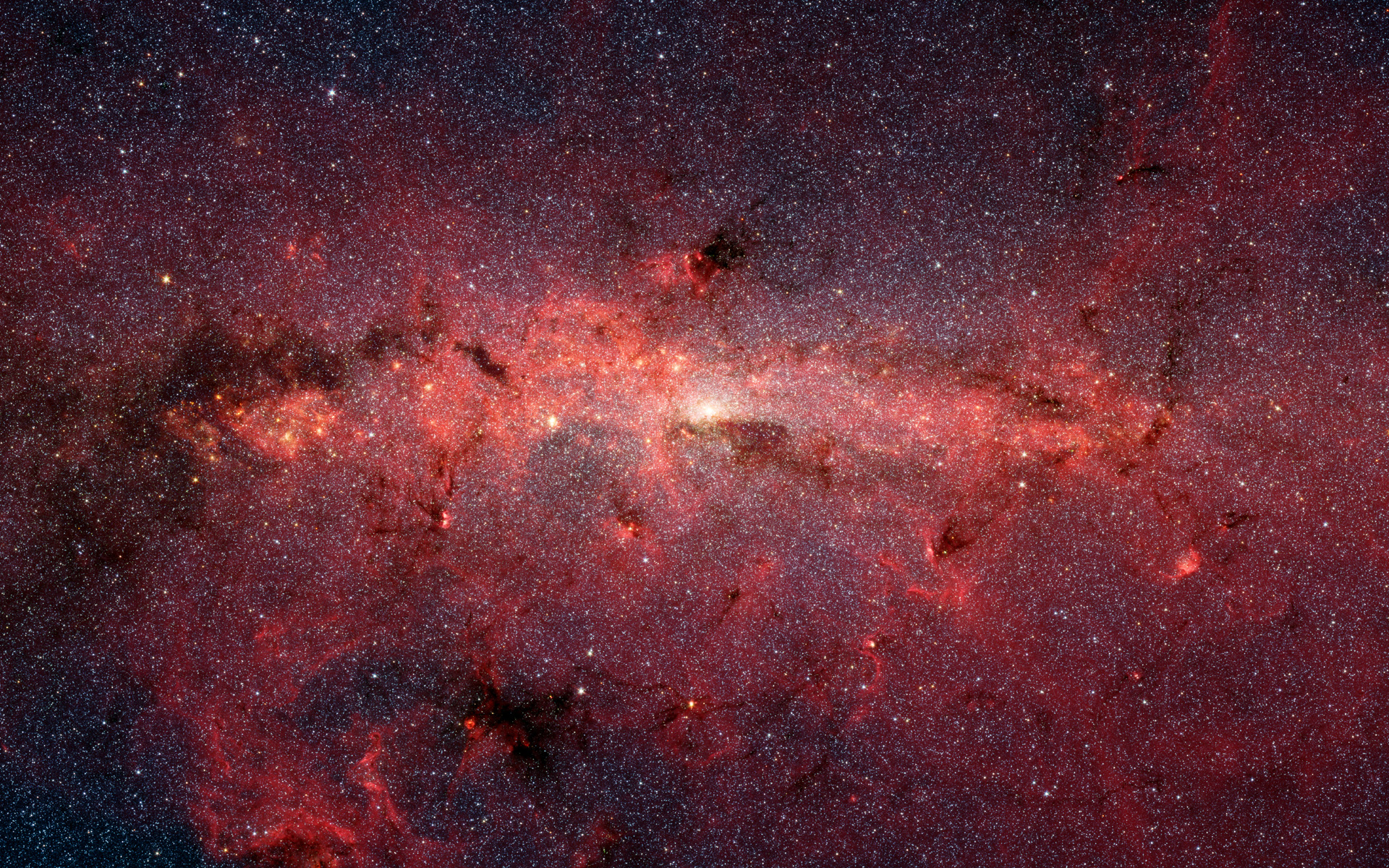
Soon the Milky Way took on a shape that I don't think I've ever seen... it was really cloud-like... as I looked at one part or another it occurred to me that the rest of the Milky Way, where I was not focused, took on the Milky look the ancients saw and named it for. It was stunning. Toward the core the main arm of the galaxy and the "off-ramp" seemed to intertwine at their junction, and the core of the galaxy emerged from that area and extended into the middle of Ophiuchus. Bright knots and dark lanes and fingers were everywhere. I thought that some night I'd like to just lay back under such skies with a tape recorder and literally describe the view from one end to the other. There was sooooo much detail that I was truly overwhelmed.... remarking at one point to the remaining observers that the little faint fuzzies I look at normally are fun to find and try to see detail in, but the real show was our own galaxy.

Finally, we began talking about the sugary appearance, especially through Cygnus and points north into Perseus. Then it dawned on us just how much Milky Way was really showing.... the length was horizon to horizon, as already aptly described by Phil Terzian when he returned. But, what astonished us was the width... looking carefully I could see the galaxy extending from Alpharatz (the star that joins Andromeda to Pegasus) across to nearly Polaris. That's nearly 60 degrees. Never before have I had such a view, such an experience. It was the perfect way to finish the star party.


Friday, June 7, 2002

Shingletown Observing 6/7 - 6/8

A group of TAC subscribers spent Friday and Saturday observing at Shingletown, east of Redding, on the western slopes of the southern Cascades. Ancient Mt. Tehama's remnants, including Lassen Peak, stood snow capped against the deep blue sky to our east. While viewing conditions were poor in terns of stability and wind, but transparency was excellent.

The strong winds we had are unusual in the area this time of year. Those conditions made the airport unusable, so we took out binoculars, both hand held and on a bino-mount, and observed many bright Messier objects from in the street out front of the George and Althea Temple's home, there on Star Trek Drive. Dean, Ken, Evan, Kevin and I were joined later by Jane and Jim. The sky was no less than spectacular. I could not get over the feeling that I was standing in the lot at Bumpass Hell on a good night. We took in M4, M5, M13, M92, M57, M3, M101, M81 & M82, M27, Comet IK, M10, M12, M11, NGC7000, M53, and I'm sure more. We had a great time just being out under a wonderful sky and seeing what we could do with binos.

The next night was also windy, and we decided to set up in Temple's side yard. There are tall trees all around, which is a drawback, but overhead the sky again amazed. The Milky Way was highly granular through Cygnus, and the star clouds in Scutum heading toward the spout of the Teapot were billowy white. Our group was joined by Bob, Mags, and two amateurs from the Redding area that are part of the new TAC-Shasta mailing list. It was a very good group.

At one point I did a star count in the Finnish triangle described by Alpha CrB--Gamma-Alpha Boo, and came up with 61 stars, four more than I've seen at Bumpass Hell. 61 stars put my limiting magnitude at 7.2. Since I count stars that I feel reasonably sure I see, but not but may not be 100% sure of (those that are at the limit of my perception) I usually throw out some. I discarded 10, and the limiting magnitude at 51 stars drops only to mag 7.0. Not a bad sky, and bodes very well for our Shingletown Star Party next month. By the way, the horizons at the airport are awesome!

Since we had limited horizons Dean and I picked one part of Draco and opened the Night Sky Observers Guide. We used 18" Dobs with powers ranging from 100X to 212X.

Copied from The Sky, we observed:

NGC 6742
Other description Planetary nebula disc.
Constellation Dra
Dreyer description Very faint, stellar.
Magnitude 15.0
RA 18h 59m 18.8s Dec: +48 28'02"
RA 18h 59m 18.0s Dec: +48 28'00" (Epoch 2000)
Azm 55 07'42" Alt: +40 14'07"
Size 0.5'

NGC 6690
Other description Very elongated galaxy.
Constellation Dra
Dreyer description Pretty faint, large, round, between 2 stars.
Magnitude 13.0
Surface Brightness 14
RA 18h 34m 43.0s Dec: +70 31'57"
RA 18h 34m 48.0s Dec: +70 32'00" (Epoch 2000)
Azm 25 25'20" Alt: +45 25'41"
Size 3.9' x 1.1'
Position Angle 170.0

NGC 6667
Other description Elongated galaxy.
Constellation Dra
Dreyer description Very faint, pretty large, little extended, very faint double star nearby.
Magnitude 12.0
Surface Brightness 13.5
RA 18h 30m 38.2s Dec: +67 58'56"
RA 18h 30m 42.0s Dec: +67 59'00" (Epoch 2000)
Azm 28 59'08" Alt: +46 06'11"
Size 1.9' x 0.7'
Position Angle 104.0

NGC 6654
Other description Round galaxy with bright core.
Constellation Dra
Dreyer description Star of magnitude 12 or 13 in pretty bright, pretty large nebulosity.
Magnitude 11.6
Surface Brightness 13.7
RA 18h 23m 59.3s Dec: +73 10'55"
RA 18h 24m 06.0s Dec: +73 11'00" (Epoch 2000)
Azm 21 28'54" Alt: +45 45'41" Always above horizon. Transit: 10:25
Size 2.8' x 0.6'
Position Angle 62.0

PK94+27.1
Galactic Longitude 94
Galactic Latitude +27.1
Angular Size 115
Mean Radial Velocity:
RA 18h 21m 48.8s Dec: +64 21'29"
RA 18h 21m 51.2s Dec: +64 21'35" (Epoch 2000)
Azm 34 07'27" Alt: +47 20'12"
Size 1.9'

All but the PK were easy. The PK required higher magnification (212x) and an Oxygen III filter to reveal a hint of the object and its central star.

The remainder of the night was spent on eye candy. Most notable were:

The Veil Nebula (NGC 6690, NGC 6992-95) - marvelously twisted strands of warm taffy looking very 3-dimensional. The OIII filter revealed detail that I only see when in a true dark sky. The view was sufficient to create a line at my telescope, even at this small backyard star party!

The Crescent Nebula (NGC 6888) - only time I've seen it better was at Bumpass Hell parking lot. Even on Saturday night the view was of a complete "egg" shape - empty inside other than the bright star at the and nebulosity trailing off it to where it joins the brighter western and northern sections of the "egg".

M27 (NGC 6853) with an OIII filter - the apple core was obvious, in fact very bright. The rest of the nebula showed well, filling in the "eaten" parts and extending away into a somewhat oval shape.

It was going on 3 a.m. and the wind was coming up, blasting us on occasion with clouds of dust.

We were tired but satisfied. It was fortunate that we had our scopes set up where we were staying for the night, as we'd also been enjoying some wonderful coffee with Bailey's and Kahlua, which also helped warm us against the wind chill. Thank you again "Two Dob" :-)

One other object of the trip was attending a meeting with the Shingletown Activities Council and to again visit the airport. I will post under another topic the additional information we obtained this trip about the Shingletown Star Party.