Friday, May 9, 1997

Galaxies, Dark Skies and Warm Nights!

Several members of The Astronomy Connection (TAC) spent a great evening at Fremont Peak last Friday. The top-side weather was more cooperative than we'd seen in many weeks, and down low, the fog rolled in sufficiently to turn it into one of the darkest n ew-moon weekend nights in the past few years.

I was set up with my rickety-old 14.5" f/5.6 dob. I was surprised to find the collimation almost exact upon set up. A quick tweak and all was right with the world, at least within walking distance. My two children, wife and 6 year old yellow lab "Jones " were along. Jones and my son were having a great time with a long time astronmer who is an accomplished juggler. My friend got help from our resident collimation expert "Gary" and his 18" f/4.5 Obsession was ready for action. The rest of our group we re less convinced than we that down on Coulter would be the best southern horizon, so they set up just up the road at the overlook parking lot. I guess they just liked the eye-popping view of the California coastline from Santa Cruz to Monterey that can be had from their vantage point. Aside from Gary, who was set up for CCD, Jim was there with his 16" home-built "big-blue" dob, Bill with the 12" LX-200, Richard with his double mount holding a C90 and Orion 80mm short-tube, Dean with the 5" Astrophysics, Akkana with the 4" and 6 " RFTs, and an assortment of others. The rest of "the group" were set up over by the observatory... John with a 7" Astrophysics, Rich with a 7" Astrophysics, Gil with his 100mm Zeis-o-Physics, Mike with the JMI 18, and David with the 12" Orion dobbie. SJAA pres Jack Z was set up there with his 17" home-built dob as well.

Thin clouds hung off the coast, but did not move inland at all. Slowly, fog moved in over the coastal cities, raising expectations that we could have a very good night. Before dark, I spent time viewing the thin crescent moon, Petavius' main crack, was very obvious, and a great sight.

Wondering what power would resolve the Ghost of Jupiter in the still bright twilight, I was able to find a couple guide stars just blinking in and out. The big blue ball appeared quickly at 107X. Nice greenish-blue, and unmistakable. Thnking that was e asy, I jumped over to M104. Someone commented that the bright twilight was not really very good for galaxy hunting, but there it was, nice and broad, with the dust lane prominant. I jumped up to M51, which already showed good spiral structure. Quickly, before Gemini dropped into the horizon, I took a look at the Eskimo nebula to confirm what someone on sci.astro.amateur had told me... that they liked the blinking effect of that planetary more than that of the Blinking Planetary in Cygnus. I think I have to agree!

As darkness began to settle in, and the fog became thicker, my wife made dinner. Several of us sat, ate, had some cold drinks and watched the stars appear. My daughter took off to the ranger's house to spend some time with his daughter. The Peak is a magical place to bring a family.

Once it was reasonably dark, Alan and I got back to the Herschel list. This would be a fine evening for that endeavor. The sky was cloudless and it was getting truely dark. There was no need for hats, boots or jackets... the temperature was very comfor table. We began our searches back in Coma Berenices, where we had left off last week. There are enough Herschel objects just in Coma for several observing sessions, and my time in that area is surely going to span several years.

As usual, I chose the Tele Vue 19mm Panoptic for viewing. It has a sufficiently wide field with which to locate objects, yet, enough magnification to show them well. Not in this order, here are the galaxies Alan and I viewed in Coma:

  • ngc4189 - large and round galaxy, with galaxies ngc4193 (small) and ngc4206 (large edge on) in field.
  • ngc4237 - elongated galaxy, close to M98. ngc4283 - Round galaxy close companion ngc4274, IC779 (mid 14's?), NGC4314 and ngc4245 in or near field.
  • ncg4312 - nice elongated galaxy very close to M100. ngc4377 - small round galaxy with bright core.
  • ngc4379 - round galaxy, in same field as edge-on ngc4396. ngc4421 - round galaxy very near 4379 and 4396.
  • ngc4455 - nice eleongated galaxy. ncg4489 - very eleongated galaxy, same field with ngc4498.
  • ngc4525 - small elongated galaxy in same field with very dim ngc4502 (both my references are mag 15).
  • ngc4540 - fairly bright roundish galaxy with ic800 and ngc4523 in same field.
  • ngc4595 - smal, dim galaxy, alone in the field, but close to large elongated ngc4559. ngc5016 - small roundish galaxy alone in the field.
  • ngc5116 - nice dim elongated galaxy. ngc4634 - with ngc4633 - nice view of 2 dim elongated galaxies.
  • ngc4286 - nice field with ngc4278 and ngc4283.

During the night, Bill, Jay and Akkana, came by and asked to view IC4167 in Hercules. This is a small and elusive galaxy between M13 and ngc6207. I had seen it on several occasions through a 17.5" dob that TAC member Ray owns, but never in the 14.5". With averted vision, I had no trouble seeing its dim glow. Others requested more power, so out came the 19mm and in went a 10.5. I liked the view better at lower power. Of course, since we were right there, we enjoyed the views of M13 and ngc6207. Onc e our friends curiousity was satisfied, Alan and I got back to real observing. ;-)

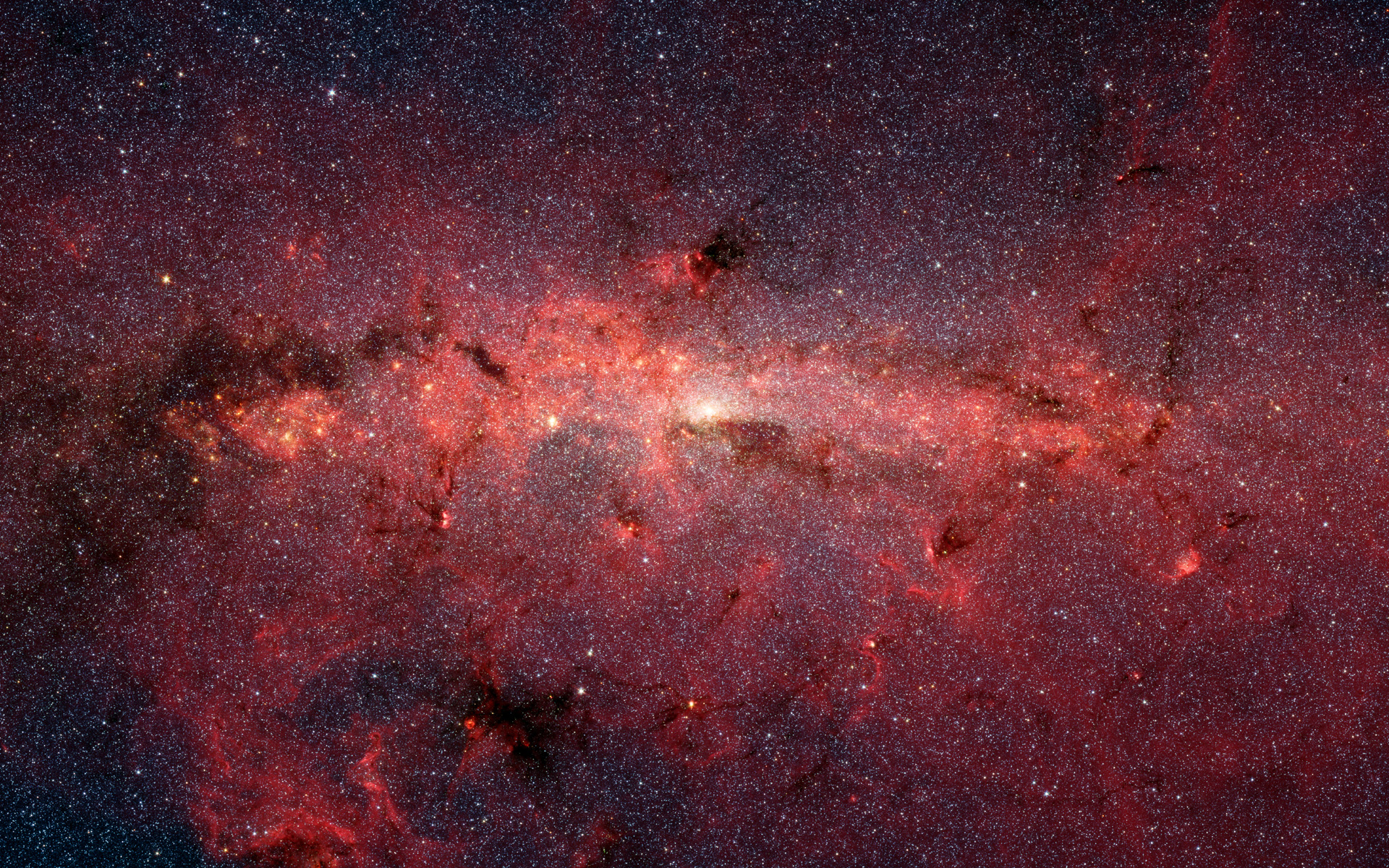
Since there are times that Alan and I do not find our targets simultaneously, we will stray off looking at other objects while waiting for each other. Mine included M3, Barnards Galaxy, M22, M28, M2, M15, LDN108, ngc6522 and ngc6528 ("twin" globulars), M4, ngc6144 (globular by M4), Veil Nebula (no filter). I especially enjoyed the tendrils and blackness of the dark nebulae in Sagittarius. The darkness snaking and curling through the star fields of the central bulge of the Milky Way are truely delightfu l. And, as usual, looking at the brighter objects listed in this paragraph (with a few exceptions!) after looking at faint fuzzies all night is a real treat.

The most unexpected thing I heard all night, prompting a quiet chuckle, was Bill, after looking at IC4167, commenting on how bright ngc6207 is. My, my, just a few months ago, he'd be remarking about how dim 6207 is! Its all perspective... and experience...

All to soon, the east began to brighten. Jupiter was rising high, and my eyelids were getting lower. My new cot was calling. I lay back with the expanse of the universe my ceiling, watching the million suns glow in the distance, until the blackness of sleep put them out.

Observing with a group is great fun. If you are an active observer, or want to learn about techniques and equipment, and live in the San Francisco bay area, you are welcome to join us for our observing get-togethers. The schedule is on our web-page.

Tuesday, April 15, 1997

Quick observing in Los Gatos

After all the comments about the hair-n-muck covered mirror my 8" f/6.9 little dob received at the Messier Marathon last month (nobody even would touch it), I decided to clean both primary and secondary today. I let my 12 year old son get some experience, so I watched and advised, and he did a decent job. Then I did it again to get it really clean (boy, did I get tired scrubbing that thing! ;-)

We went out back and played with the collimation for a bit, and then I pointed it at the moon (yes, me, looking at the moon), and was astonished at the clarity the little scope provided. I was using my 35mm Orion Ultrascopic, and it was dazzling. But, I kept thinking the seeing was coming and going, so I did not get too excited. I peeked around and found Sirius, and decided to star test. What a surprise. Nice rings inside and out of focus. I love slow scopes!

Darkness fell, and it was a shirtsleeve night. I only wish we'd get a night like this at Fisher! I looked at Mars and with a 3.8mm Ultrascopic was able to detect some surface features. A bright spot on the limb, probably the polar cap. Some hints of dark markings, and another white spot near but just off center. Being a deep-sky-guy... I really can't tell you what I was seeing. I'll leave that to the Hacksaw (if you don't know who that is, feel free to ask). Soon it was nice and dark, even with a good 1st Q moon out. So, back to the moon I went. Believe it or not, and this has only happened once before, I was so interested in one crater near the terminator, I decided to draw. Yikes! I could feel full-blown lunacy sweeping over me as I stood with my kitchen light on behind me, peering through the eyepiece, then down at the piece of paper. It was really quite enjoyable once I loosened up and began having fun with it (instead of seeking perfection). I am no lunar artist, but I have posted the sketch to a URL:

http://www.rahul.net/resource/mypics/moon1.gif

Have a look. Maybe someone can tell me what I was seeing (it is a very distinctive crater).

After I finished drawing, I moved to the back of the yard and, using a Meade 10.5mm, popped right onto M81. Boy was I surprised. I had to get my 19mm Panoptic for a wider field to confirm what I was seeing by finding M82 in the same field. This little scope gets good images in town! Then, the test. After some hunting and grunting, I actually detected the cores of M51 and that other smudgey blob. I was impressed I could even see it. M109? No way. M108 or the Owl... ha, not here. The Eskimo? Dropped right on it.... and it did the same trick as the blinking planetary in Cygnus (stare at it, the nebulousity disappears and its just a star, look away slightly and it becomes a nebula again). Down to M35... need aperture... but still nice. Then into Leo... M65 and M66 are there, and not too bad, but the 14.5" in dark sky it's not!

A phone call interrupted me, and when I went back outside the mood was broken. I covered the scope, and went in. About an hour outside, and it was great. Sometimes I think the quick "mental breaks" in my backyard are the most rewarding (but maybe I'm just rationalizing between new moons).

Friday, April 4, 1997

Freezing in Coma

A few brave souls fought Friday (4/4) afternoon San Francisco bay area traffic to Henry Coe State Park in order to beat the crowds of comet-crazies that were sure to decend like flame-driven moths to local observing sites on Saturday. Richard Navarrete and I found each other at a red light on the freeway turnoff heading up to the park, 15 miles from our destination.

The road soon narrowed into two twisting lanes, leading us to and around Anderson Reservoir. People were fishing along the banks, some setting up for the night. The road narrowed in places to a single lane, where gravity and weather conspired to cover man's intrusion, but our path was still passable. Up by a local farm Richard slowed almost to a stop on a hairpin turn to the right, and as I followed, there stood several peacocks, one in full display turning toward me, colors shimmering in the late afternoon light. Continuing uphill, we passed several hillside pastures with both milk cows and longhorn steer, the Coyote Valley, Morgan Hill, Gilroy and the greater bay area receding behind us as we climbed the roadway toward a night away from the present.

Soon we arrived at our destination. The only company there were three trucks with empty horse trailers attached. The owners were on a multi-day ride in the park, as evidenced by the tags stating they must be out in two days. The only sign that a living being had been there was a large "don't step in it" spot by one of the trucks.

The wind was cold. You Arctic types from the mid-west of or eastern seaboard of the US, or those heartiest of observers north of the border, you in Scotland or Alaska, forgive me if I tell you that the wind cut through us like a gale-blown icicle. Before sundown, I was in most of my heavy winter clothing. But for a few layers of low cloud to our west, the sky was clear.

Soon, Hale-Bopp and Sirius appeared. Betelgeuse, Rigel, and Cappella soon followed. Regulus, then the whole sky began shining white points and the Milky Way glowed crossing above Canis Major, Orion and into Auriga. Hale-Bopp was skirting San Jose's light dome to the northwest. The tail measured between ten and fifteen degrees naked eye, depending on where you felt it disappeared in Cassiopeia. The dust tail was easily the more noticeable of the two.

The wind began to die, but the chill would not go. More clothing went on. I turned my back to the city glow to face the south and east, where nothing seemed to intervene between me and the stars.

I had worked a bit of Coma Berenices the prior week, enjoying the rich galaxy fields. Reading about this part of the sky a few days afterward, I found most galaxies to be in the neighborhood of 40 million light years distant, but some, and I will hunt them down, are part of the actual Coma cluster, and 400 million light years distant. There is something magical about seeing that ancient light.

The viewing really started about 8 o'clock. I quickly landed on the first galaxy I was looking for, and though I am not a superstitious person, I always like an "easy" first object to put me in a "successful" frame of mind. Believe me, there is nothing worse than hunting for 40 minutes for an object that turns out to be a dud "almost-ain't-there" smudge. Coma was fun, because the nice triangle of dim stars flanked on the sides by brighter landmarks make navigation easy. The challenge is, being sure you are looking at the correct object, there are so many.

My favorite had to be east of Denebola (Leo's tail). A short hop and you are looking at galaxies galore around M98 and M100. 98 is a nice spiral tilted slightly from edge-on toward us. It is huge in comparison to other Herschel objects. Crossing the naked eye "locator" star almost diagonally, M100 comes into view. It is face on and awesome. These are the two galaxies I used to "galaxy hop" through the crowded fields of smaller island universes. Starting at M100, and moving away from M98, once finds a pair of bright stars, one closer to the big galaxy. Following the line described by the galaxy and closer star, one will come to a pair of galaxies: NGC4302 and NGC4298. They are easily in the same field. I had mistakenly located another pair at first, looking at them and thinking "wow -- these are dim and almost inseparable to me" ... but something did not seem right. Backtracking, I tried again, and success! Two gorgeous galaxies, one nearly edge on, the other almost face on, came into view. They are not bright as the brightest Messier's, but these are big and (I will need to read up on them) may be interacting. They are a great sight.

I was not cold now. Up and down the ladder. A few of my "flavored" coffees also helped keep me warm. By now, Rich Neuschaefer and Jay Freeman had arrived. Navarrete had been busy shooting photos of Hale-Bopp. The place was still empty. What a treat! Concentrated, uninterrupted observing! Almost no headlights. Darkness to my face! I was beating up Coma until it was a zenith, then I tried Bootes. After a few confirmed finds, and pegging a mag 14 (not bad for the unsteadiness of the night), I sat down.

Richard told me I had logged a lot of galaxies. I did not think so. It was so relaxing, so refreshing. What did I have... 15 total, maybe? We sat back, and talked of the cold, the summer, the Milky Way, families, health insurance, dark skies, the comet. Two hours later it was 2 a.m. and we decided to pack up and find the comfort of our own beds. Family awaited us in the morning.

I drove down the mountain, narrowly missing an opossum crossing the road. The night fishermen had lamps glowing off the side of the road around Anderson Resevior. Soon, it I was heading back to the land of fast food and pavement. Back to the land of modern light.

Richard read a temperature sign off the side of the freeway on the way home at 2:30. 38 degrees down *off* the mountain.

I logged 37 Herschel in a relaxed and very enjoyable short night. But it was a cold night, freezing in Coma.